How to play high notes on trombone
One of the most common questions my students ask me is how to increase their range.
In this post I will cover one of the most effective ways to quickly improve your range on trombone.
What do I need to do to play high notes with ease?
Playing in the upper range of the trombone takes more than “tight lips” and “fast air.” Consistent and clear sound on the entire range of the trombone requires (but is not limited to) the following:
Balanced posture
Muscle relaxation and engagement
An appropriately focused embouchure for the desired note/partial (not too tight, not too loose)
Consistent and immediate air support
Unlearning bad habits for playing high notes
In efforts to play in the upper range of the trombone, many developing trombone students will do the following:
Firmly press the mouthpiece into the lips
Overly tighten the aperture (the hole between the lips where the air travels) which restricts airflow
Use muscle tension in unhelpful areas (tightness in throat, furrowed brow, raised shoulders, arms bracing the torso)
Why do I sound pinched when I try to play high notes?
If any of the “bad habits” from above apply to you, it is likely that your airflow and/or embouchure position are misaligned for the note you are aiming for.
Play high notes by both relaxing and using focused air and muscles
To play in the upper register with a clear tone, we have to use a combination of rest and focus. Follow this step-by-step guide to begin your embodied and balanced approach to exploring the upper range of the trombone.
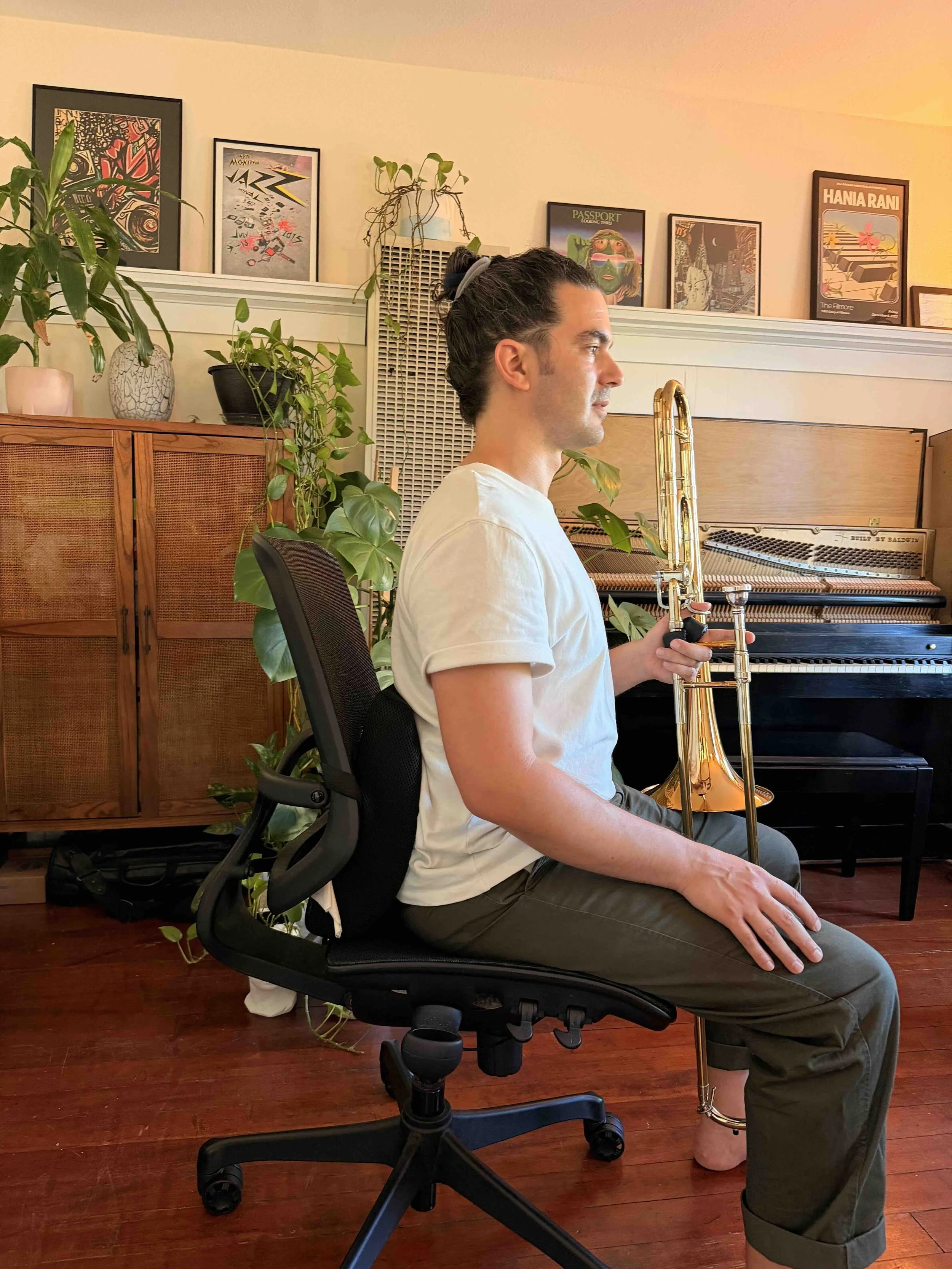
1.Drop into your body from the ground up in resting position
Notice your feet planted on the floor
Sit up straight, but relaxed with your torso away from the back of the chair
Shrug your shoulders and relax your neck and jaw (try swallowing saliva to soften the throat)
What do you notice with this posture?
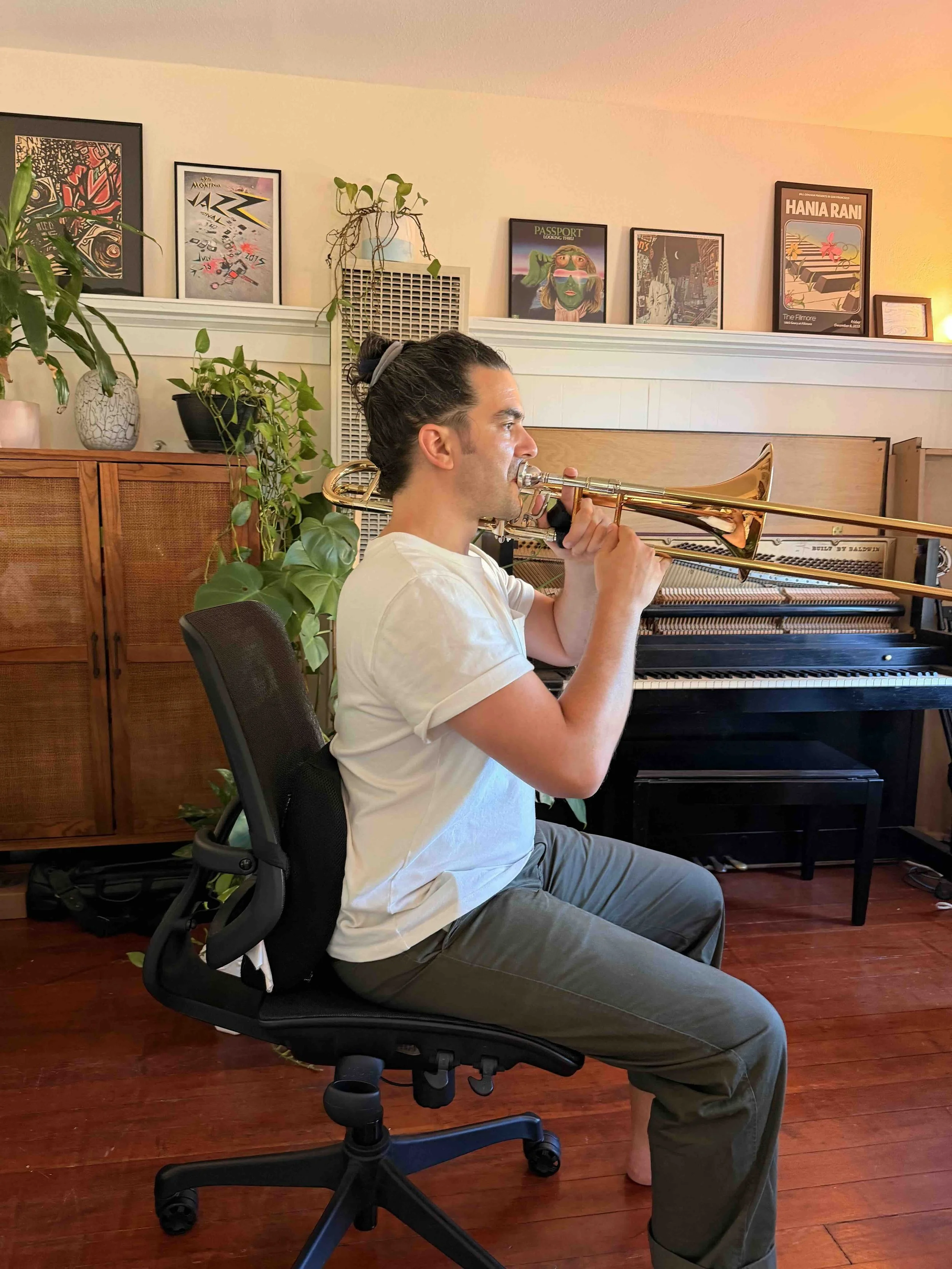
2.Pick up your trombone and bring yourself into playing position
Bring the trombone to your body rather than leaning forward to backward
Resume the same posture as before with the trombone balanced between both arms forming an equilateral triangle
What makes you feel balanced? Do you feel upright while still holding the instrument?
3.Take a relaxed breath into your ribs and at the apex of your breath, form your embouchure, tongue and exhale in rapid succession
Did you hold air between the inhale and exhale? Try not to hold in the air at the top of your breath.
How did the beginning of the note sound? Was it clear, fuzzy? If you are unsure, try this four times.
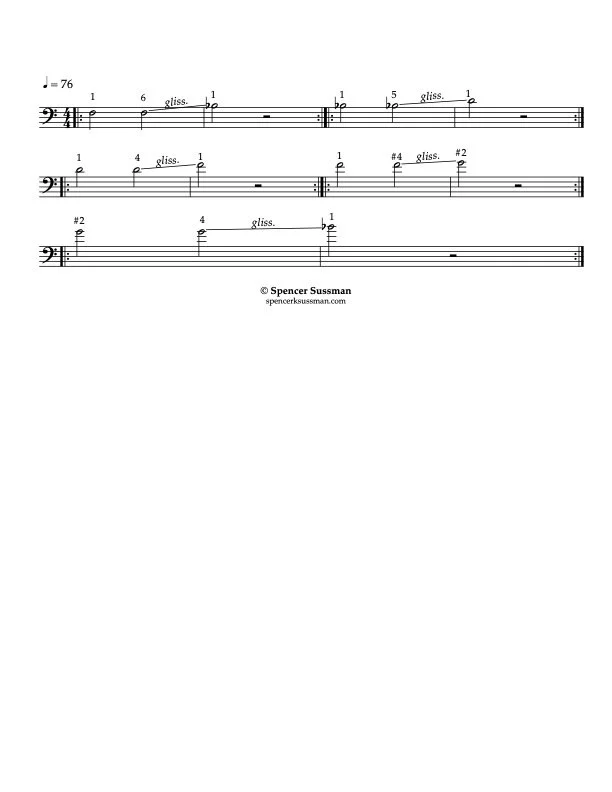
4.Complete this exercise
Play each phrase two times each with the metronome
Focus on clear articulations, consistent air support
Performance note: feel free to continue beyond what is in this exercise, and similar concepts can also be used to help low range development.
Checking in with your body
You may ask yourself, do I have to do the body check-in before playing? While you may be able to play higher notes with a slouched posture, I have found that periodically checking in with my body before playing (which can be as quick as a few seconds) has helped me:
Play with more ease
Maintain stamina
Perform with greater dynamic range
Increase high note accuracy and consistency
If it only takes a second or two, why not include this in your routine?
Troubleshooting your high note production
If you are having trouble glissandoing to the higher note within the same partial, try crescendoing immediately after the first note. Imagine your air is traveling through your trombone, out the bell, and across the room in a full, focused stream.
Important high note tip: Take breaks
As we train our muscles and our minds, it is essential to step away from our instrument to give ourselves a rest. Trombone players are athletes! Working on your upper range can be both physically and mentally taxing at times. We are training a complex system of muscles in the face and torso to work together, while taking notice of our posture, breathing, air support, and sound. Like many complex tasks, taking a break can help our mind and body synthesize our learning and help us revisit our practice with a more informed and embodied perspective.
When to consider working with a trombone teacher
Developing a consistency and comfort in the upper range of the trombone can take time and patience. Working with a trained, third-party perspective can bring awareness to bad habits and provide personalized guidance toward success.
You may benefit from working with a private trombone instructor if you are experiencing the following:
Getting stuck trying to play in the upper range of the trombone
Uncertainty on how to improve or what to play
Struggling to maintain stamina during band rehearsals and performances
If any of the above apply, you may benefit from guided trombone lessons to help you play more confidently.